
Course Description:
This 14-hour course introduces the assessment and treatment of the cervical spine and upper extremities using joint mobilization, neural tensioning, and end-range loading techniques. Participants will study the theory and practical application of these techniques, along with conditions commonly encountered in practice, such as facet-mediated pain, cervical spinal stenosis, thoracic outlet syndrome (TOS), carpal tunnel syndrome (CTS), radial tunnel syndrome, frozen shoulder, and shoulder impingement.
Participants will explore how end-range loading techniques may be used to address mobility, proprioception, and neuromuscular control, as appropriate to the patient’s presentation and within the practitioner’s scope of practice.
Objectives:
By the end of the course, participants will be able to:
- Describe indications, contraindications, and safety considerations for applying the techniques covered in the course, for both the patient and practitioner.
- Perform efficient assessment procedures to identify spinal and shoulder mobility restrictions.
- Apply joint-mobilization glides to the cervical spine and upper extremities.
- Apply muscle energy techniques (MET) to the Atlanto-axial (AA) and Atlanto-occipital (AO) joints.
- Describe and apply end-range loading techniques to joints, fascia, tendons, and bone, where appropriate.
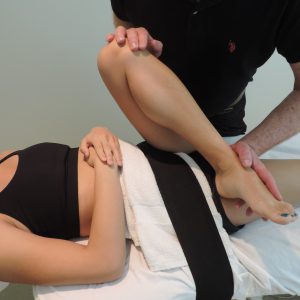
- Use an Arthrokinetic stabilization belt to help isolate the intended tissues during end-range mobilization techniques.
- Apply neural and dural gliding and tensioning techniques to the brachial plexus and upper-extremity nerves.
- Identify relevant assessment and treatment considerations for conditions such as facet-mediated pain, cervical spinal stenosis, frozen shoulder, shoulder impingement, CTS, and TOS.
- Explain the theory underlying the techniques covered and how they support patient-centred care.
Locations:
Red Deer
June 5th, 2027